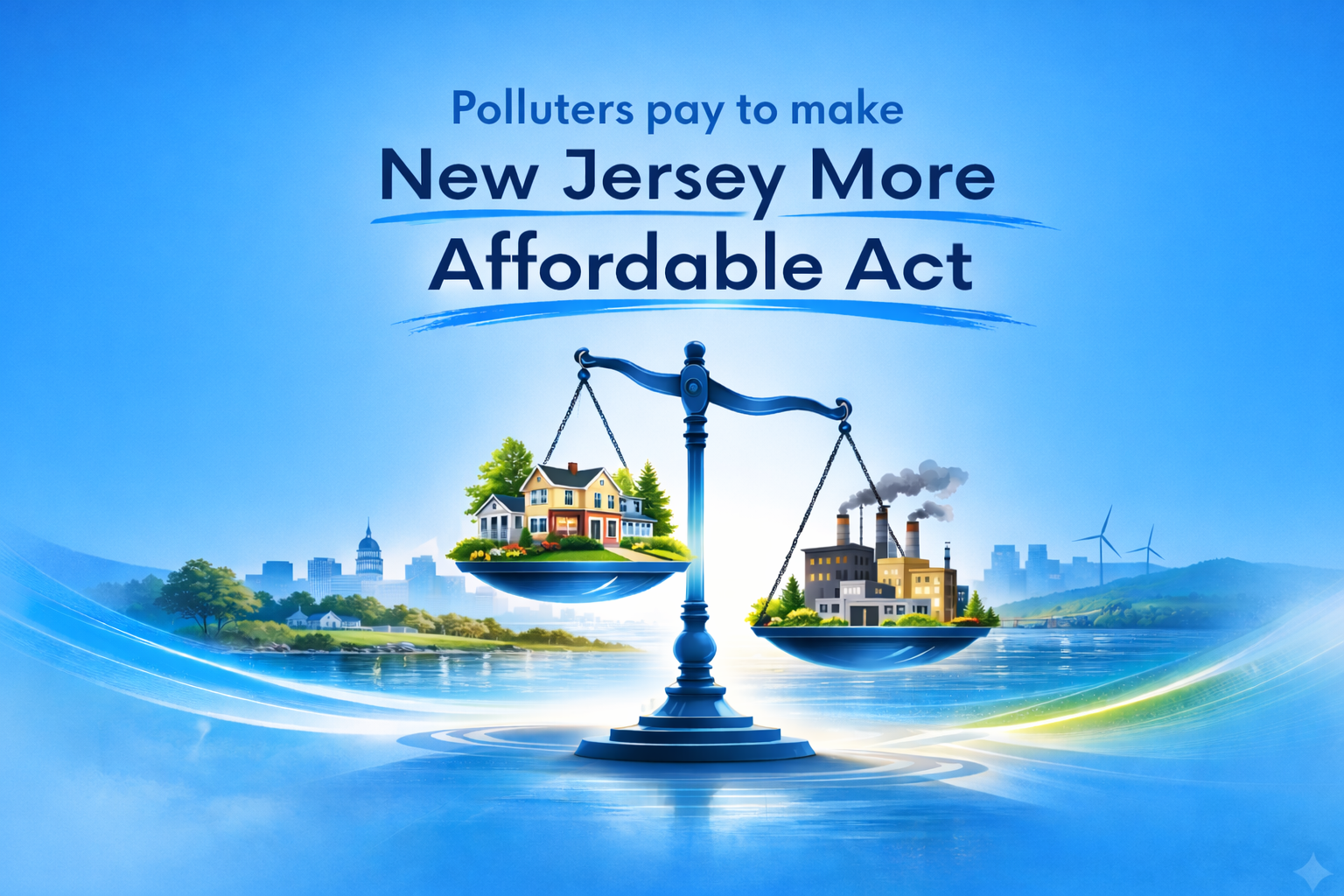
During the 2024–2025 legislative session, the New Jersey Senate advanced New Jersey Senate Bill No. 3545, commonly referred to as the Climate Superfund Act or the “Polluters Pay” bill. The legislation was reported out of committee and placed on second reading in January 2026, but did not receive final passage before the close of the legislative session. As a result, it did not become law in that session.
Although the bill expired with the session, similar legislation is expected to be reintroduced. Small businesses should therefore understand both its structure and its potential economic implications.
Overview of the Proposed Law
S3545 would have established a climate cost-recovery framework administered by the New Jersey Department of Environmental Protection (NJDEP). The bill’s primary components included:
1. Creation of a Climate Cost Recovery Program
The bill would create a Climate Adaptation, Resiliency, and Affordability Program within NJDEP to:
- Quantify climate-related damages attributable to historic greenhouse gas emissions (1995–2024);
- Identify certain large fossil fuel extractors and refiners as “responsible parties”; and
- Impose strict liability on those parties for a proportional share of statewide climate adaptation costs.
2. Targeted Responsible Parties
Liability would not apply broadly to New Jersey businesses. Instead, it would focus on:
- Large fossil fuel extraction and refining entities;
- Entities meeting a high cumulative greenhouse gas emissions threshold (1 billion metric tons during the covered period);
- Certain affiliated entities.
3. $50 Billion Recovery Target
The legislation contemplated approximately $50 billion in cost recovery to fund climate resilience and adaptation projects across the state.
4. Distribution of Funds
Recovered funds would be deposited into a dedicated Climate Superfund and used for:
- Flood control and stormwater improvements;
- Coastal protection and infrastructure hardening;
- Grid reliability and energy efficiency;
- Public health initiatives;
- Emergency preparedness improvements.
At least 51% of funds would be directed toward “overburdened communities.”
Potential Impact on Small Businesses
Potential Burdens
1. Upstream Cost Pass-Through
Energy producers and fuel suppliers facing assessments could seek to offset costs through pricing adjustments. This may result in:
- Increased electricity rates
- Higher fuel costs
- Increased freight and logistics expenses
- Higher input costs for energy-intensive goods and services
2. Consumer Demand Pressure
If energy and transportation costs increase statewide, disposable income may decrease, potentially affecting retail, hospitality, and service businesses.
Potential Benefits
1. Reduced Climate-Related Business Disruption
If implemented effectively, funded resilience projects could:
- Reduce flood losses
- Limit storm damage
- Improve stormwater management
- Decrease frequency of business interruptions
Over time, improved infrastructure may lower operational risk for businesses in flood-prone or vulnerable areas.
2. Potential Procurement and Grant Opportunities
Climate adaptation funding may generate:
- Public works and infrastructure contracts
- Energy efficiency upgrades
- Environmental consulting opportunities
- Local vendor and subcontracting work
Businesses operating in construction, engineering, HVAC, energy services, and environmental sectors may benefit.
Are Other States Taking Similar Action? As of February 16, 2026, only two states have enacted “climate superfund / polluters pay” cost-recovery laws—Vermont and New York—and both are in implementation and litigation phases.
Vermont
- Law: Vermont Act 122 enacted in May 2024, Climate Superfund Cost Recovery Program.
- Status now: On the books, but the program is largely in rulemaking/build-out phase. Vermont’s 2025 feasibility/reporting materials describe rulemaking as a multi-year process and contemplate cost-recovery demands after rulemaking concludes (anticipated on the order of 2027 in that report).
- Litigation: Federal-level challenges have been actively discussed in 2025–2026 reporting and commentary.
New York
- Law: New York Climate Change Superfund Act (S.2129), establishes a climate change adaptation cost recovery program funded by assessments on certain fossil fuel producers/refiners based on historic emissions.
- Status now: Enacted (signed December 26, 2024); implementation is underway, with early commentary indicating initial payment timelines beginning in 2026.
- Litigation: The law is facing prominent constitutional/federal-preemption challenges (including multi-state and federal DOJ litigation activity reported in 2025).
Bottom Line
The Climate Superfund Act (S3545) did not become law in the 2024–2025 session. However, the policy concept remains active in New Jersey and other states. While small businesses may not be directly liable under the proposed framework, indirect cost impacts and economic ripple effects are possible. At the same time, long-term resilience investments could reduce disruption risk and create new opportunities.
If you have questions about this legislation, please contact Angelo Bolcato, Esq. at Laddey Clark & Ryan, LLP at [email protected], or (973) 729-1880.